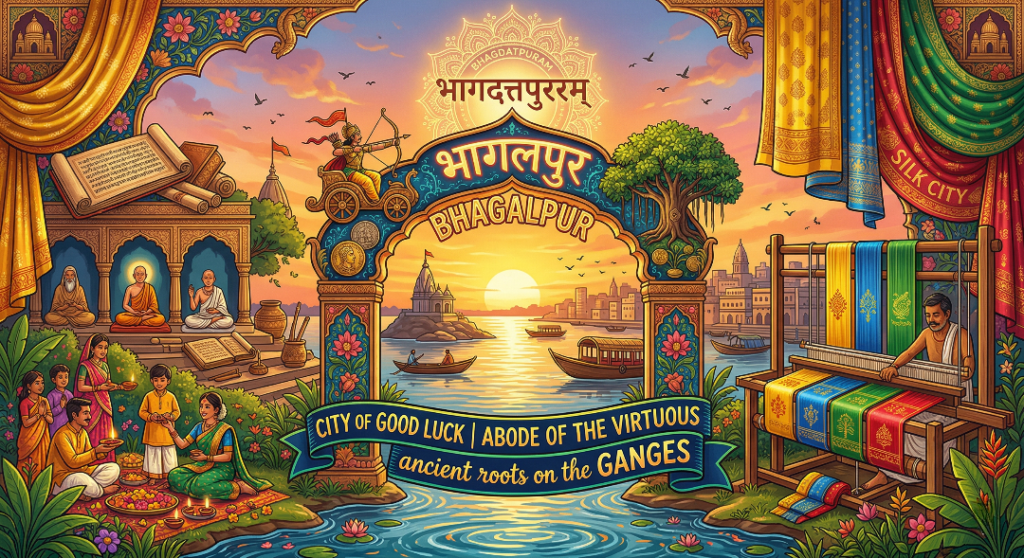
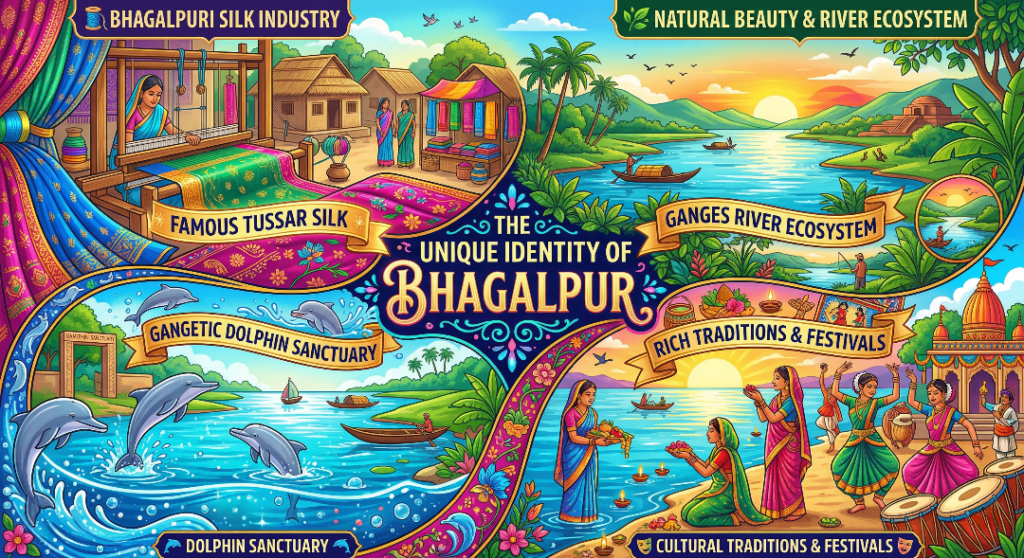
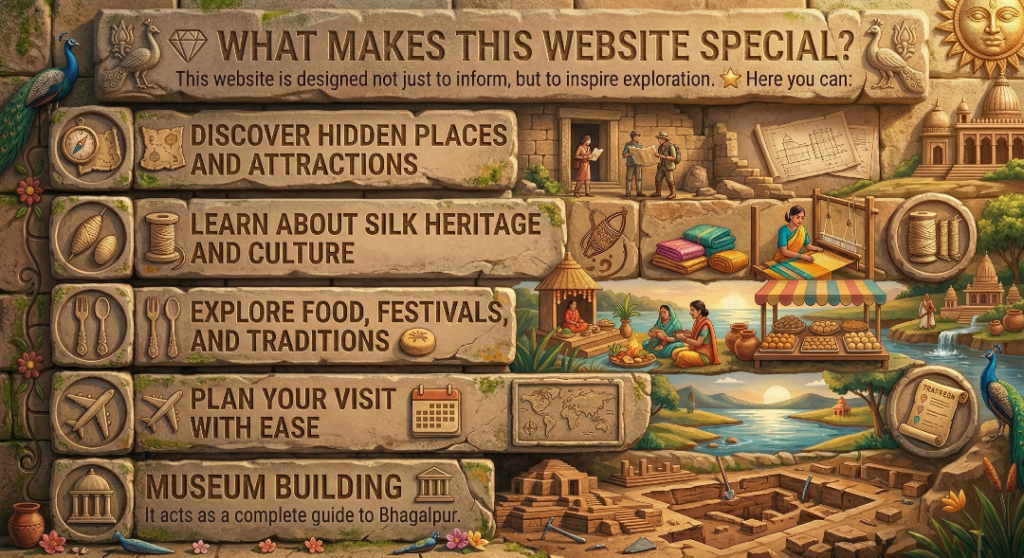
Bhagalpur, located in the state of Bihar, is one of the oldest and most culturally rich cities in India. Popularly known as the Silk City of India, Bhagalpur has a glorious history, vibrant traditions, and remarkable natural beauty.
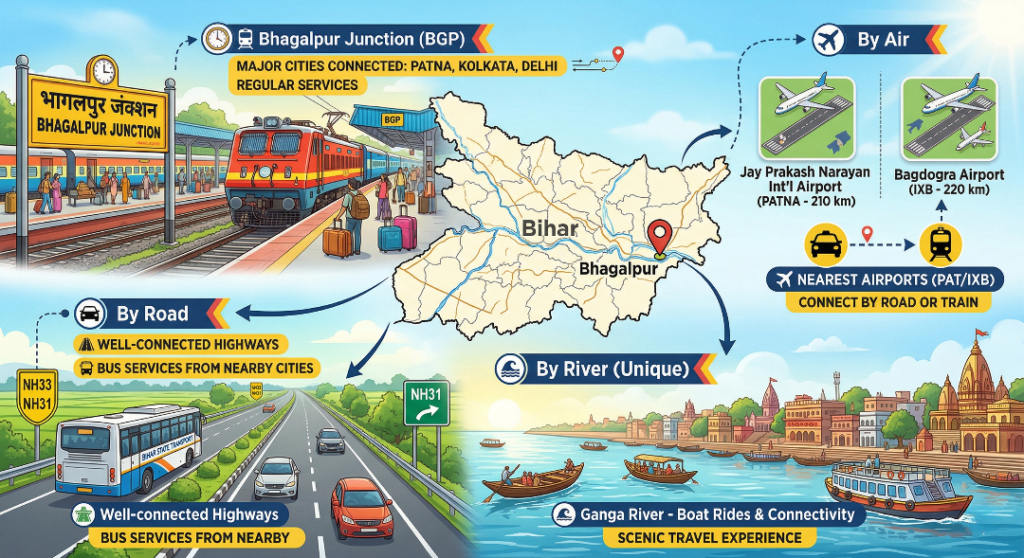
Situated along the banks of the sacred Ganga River, the city is a unique blend of heritage, spirituality, and scenic landscapes. From its renowned silk industry to its historical landmarks and wildlife, Bhagalpur offers a diverse and enriching experience to visitors.
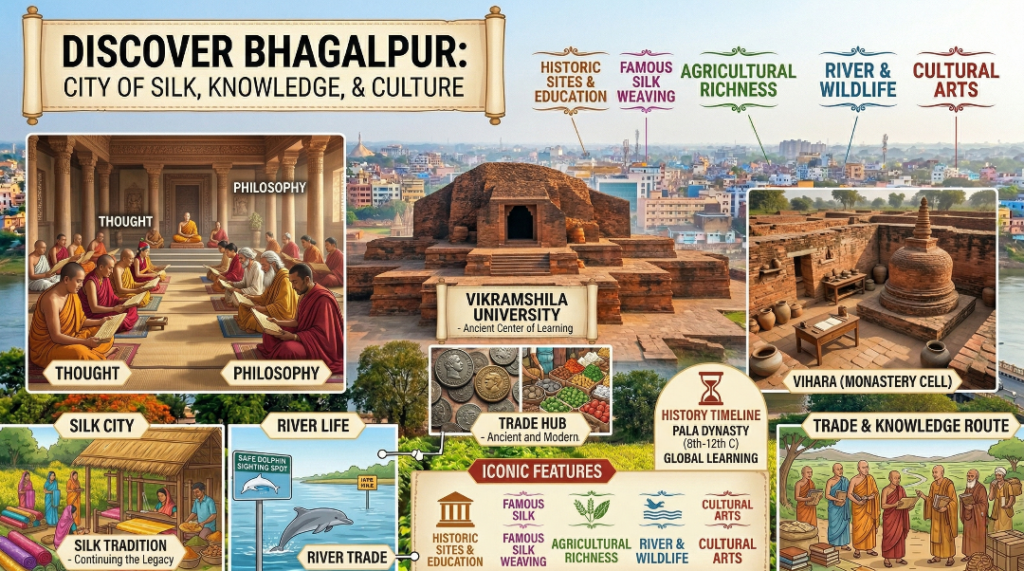
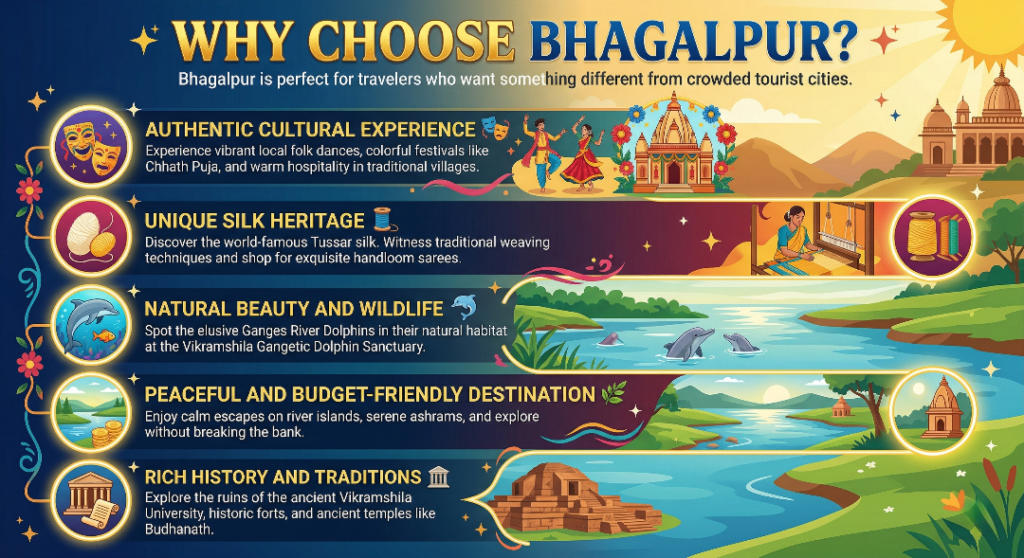
Bhagalpur, historically recognized as the heart of the ancient Anga Kingdom and the legendary capital of King Karna, stands as a venerable pillar of Indian civilization that has bridged the gap between ancient wisdom and modern trade. Its most profound legacy lies in the ruins of Vikramshila University, established by King Dharmapala of the Pala Dynasty, which served as a premier global seat of Buddhist learning and tantric studies, rivaling Nalanda in its intellectual prestige and attracting scholars from across the world. Beyond its academic glory, the city’s strategic location on the banks of the Ganges made it a bustling hub for the Silk trade, earning it the moniker “Silk City” for its exquisite Tussar weaves. This layer of history—from being a centerpiece of the Mahajanapadas to a flourishing colonial outpost—creates a rich cultural tapestry where every monument and tradition reflects a storied past of resilience and enlightenment, making Bhagalpur an essential destination for anyone seeking to understand the deep-rooted historical and educational foundations of Eastern India.
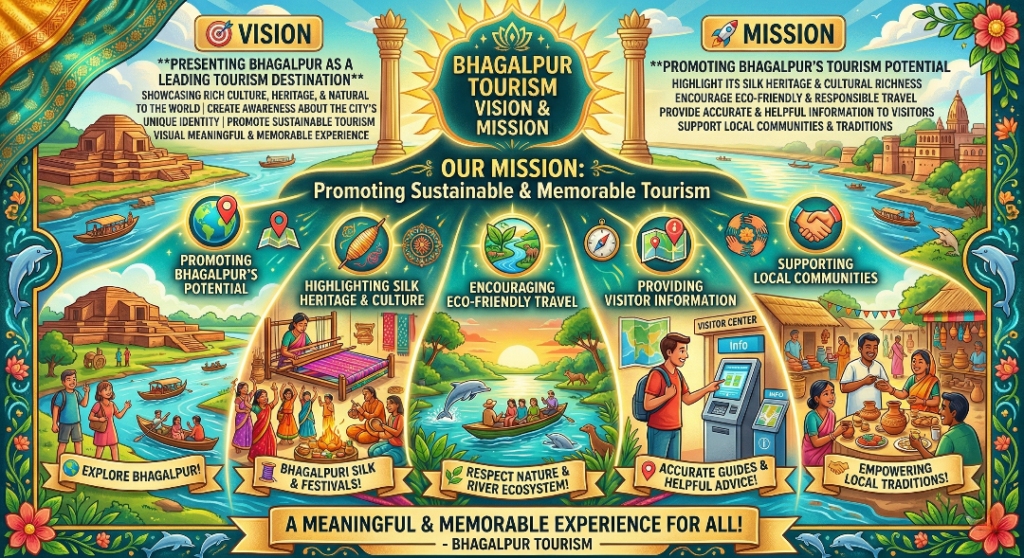
Bhagalpur is more than a place—it is a story of tradition, nature, and timeless beauty. Whether you are exploring its silk heritage, enjoying its cuisine, or experiencing its calm riverbanks, Bhagalpur offers memories that stay with you forever.